Are you passionate about animals, wildlife conservation, and the natural world? A career as a Zoological Associate could be your perfect path. In 2026, the demand for skilled zoological professionals is growing steadily, driven by expanding conservation programs, zoo modernization efforts, and a global urgency around biodiversity protection. Whether you are just beginning to explore this field or are ready to advance your career in animal science, this complete guide covers everything you need to know — from what a zoological associate actually does, to how much they earn, what qualifications are required, and how to land your first job.
What Is a Zoological Associate?
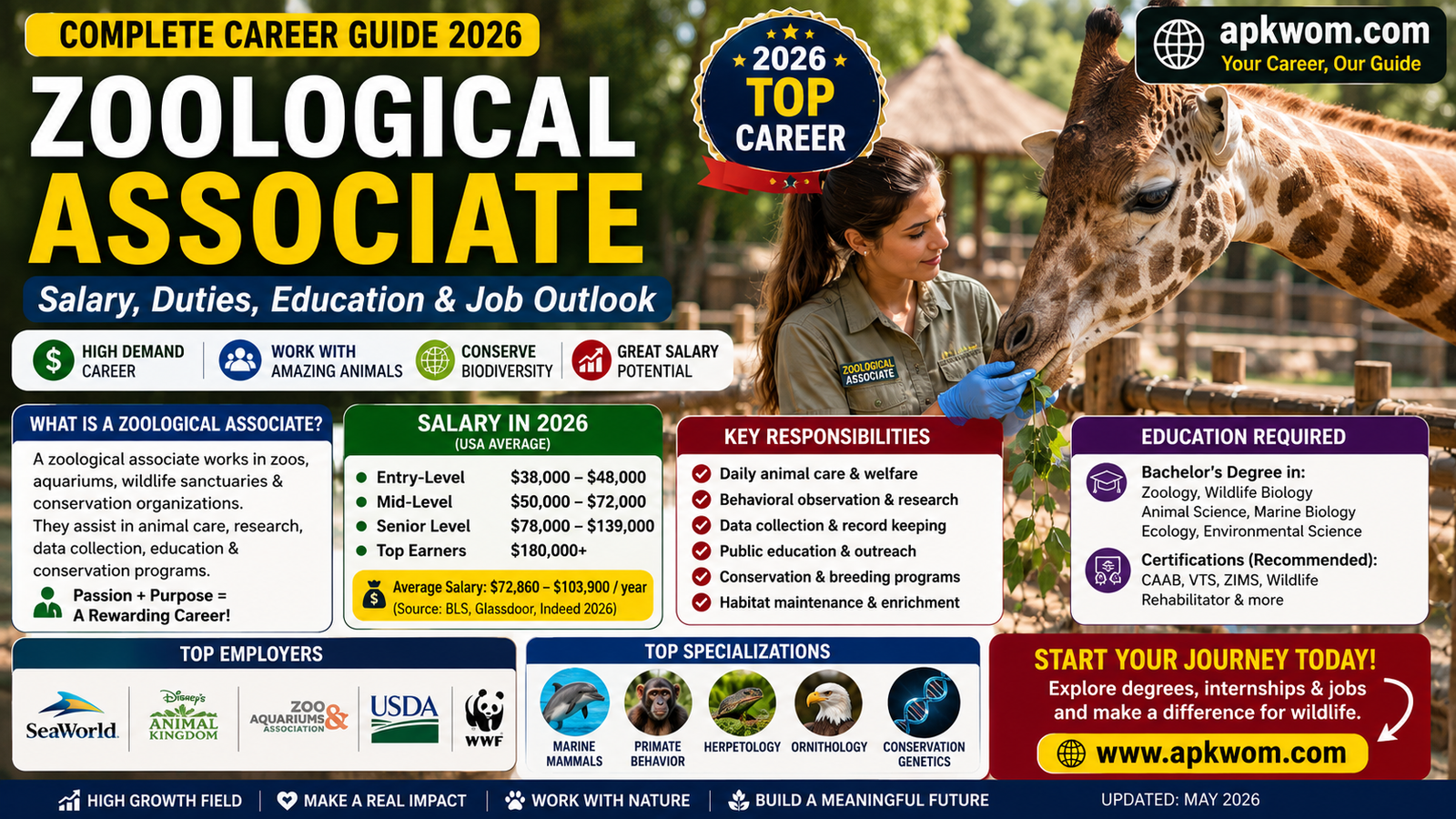
A Zoological Associate is a trained animal care professional who works in zoos, aquariums, wildlife sanctuaries, nature reserves, research institutions, and conservation organizations. They assist zoologists, wildlife biologists, and veterinarians in the daily care, observation, research support, and welfare management of captive and wild animal populations.
Unlike a zookeeper, who primarily handles feeding and enclosure maintenance, a zoological associate takes on a broader role that includes behavioral observation, data collection, public education, and participation in scientific research programs. They bridge the gap between frontline animal care and professional zoological science.
In simple terms: a zoological associate is someone who lives and breathes animal science — every single working day.
Zoological Associate Job Description: What Do They Do Every Day?
Understanding the zoological associate job description is the first step toward deciding if this career is right for you. Responsibilities vary by employer, but the core duties typically include:
Daily Animal Care and Welfare
- Feeding, watering, and monitoring animals across assigned enclosures or habitats
- Observing and recording animal behavior, health changes, and activity patterns
- Cleaning, sanitizing, and enriching enclosures to meet animal welfare standards
- Administering prescribed medications or supplements under veterinary supervision
- Participating in animal handling, restraint, and routine health checks
Research Support and Data Collection
- Assisting zoologists in field data collection, behavioral studies, and population surveys
- Entering and managing data in zoological information management systems such as ZIMS (Zoological Information Management System)
- Supporting breeding program coordination including studbook records and genetic diversity tracking
- Conducting environmental monitoring within habitats
Education and Public Outreach
- Delivering keeper talks, feeding demonstrations, and educational programs for zoo visitors
- Developing informational signage, brochures, and social media content about resident animals
- Engaging school groups and community visitors in wildlife awareness campaigns
- Supporting citizen science and volunteer coordination programs
Conservation Participation
- Assisting in Species Survival Plan (SSP) programs managed by the Association of Zoos and Aquariums (AZA)
- Contributing to reintroduction projects for endangered or threatened species
- Participating in habitat restoration initiatives and wildlife tracking programs
Zoological Associate Salary in 2026: How Much Can You Earn?
One of the most searched questions online is: “How much does a zoological associate make in 2026?” Here is the most accurate, up-to-date salary breakdown available.
Entry-Level Zoological Associate Salary
Entry-level positions, typically requiring a bachelor’s degree and limited fieldwork experience, start at approximately $38,000 to $48,000 per year in the United States. These roles are common in municipal zoos, wildlife rehabilitation centers, and nature reserves.
Mid-Level Zoological Associate Salary
With three to seven years of experience and specialization in areas such as primate behavior, marine mammal care, or herpetology, mid-level zoological associates earn between $50,000 and $72,000 per year.
Senior Zoological Associate / Zoological Specialist Salary
According to Glassdoor’s 2026 data, zoological specialists in the United States earn an average salary of $103,900 per year, with a typical pay range between $78,353 (25th percentile) and $139,586 (75th percentile). Top earners — often those in leadership positions at major zoological parks or research institutions — report salaries as high as $180,376 annually.
Salary by Industry
| Industry | Average Annual Salary |
|---|---|
| SeaWorld Parks & Entertainment | $90,000 – $140,000 |
| Discovery Cove / Busch Gardens | $85,000 – $130,000 |
| Federal Government Agencies | $72,860 (BLS median) |
| State/Local Government Zoos | $60,000 – $90,000 |
| Non-Profit Conservation Organizations | $50,000 – $75,000 |
| University Research Institutions | $55,000 – $95,000 |
Highest Paying States for Zoological Careers
- California — High cost of living but top zoo salaries
- Florida — Home to major marine parks and wildlife centers
- New York — Bronx Zoo, Central Park Zoo, and research institutes
- Texas — Growing conservation and wildlife management sector
- Washington — Strong government research and federal wildlife agencies
How to Become a Zoological Associate: Step-by-Step Guide (2026)
If you are wondering how to become a zoological associate, the path is clear and attainable. Here is a step-by-step breakdown that works in 2026:
Step 1: Earn the Right Educational Qualification
Minimum Requirement: Bachelor’s Degree
A bachelor’s degree in one of the following fields is essential for most entry-level zoological associate positions:
- Zoology
- Wildlife Biology
- Animal Science
- Marine Biology
- Ecology or Environmental Science
- Veterinary Pre-Medicine
Undergraduate coursework typically includes:
- General biology, chemistry, and physics
- Animal behavior and ethology
- Vertebrate and invertebrate zoology
- Ecology and conservation biology
- Animal physiology and anatomy
- GIS (Geographic Information Systems) and spatial analysis
- Biostatistics and research methods
Advanced Positions: Master’s Degree or PhD
For research-focused or leadership roles, a master’s degree in zoology or wildlife biology is highly recommended. A PhD is required to lead independent research projects or obtain a university professorship, with zoology professor salaries averaging $214,096 per year according to Indeed data.
Step 2: Build Hands-On Experience Early
Practical experience is non-negotiable in zoological careers. Start building it while studying:
- Volunteer at local zoos, wildlife sanctuaries, or animal rescue centers — even 10 hours per week makes a significant difference on your resume
- Apply for internships at accredited zoos — the AZA maintains a list of internship programs at member institutions
- Join citizen science programs such as eBird, iNaturalist, or WWF monitoring networks
- Participate in field research opportunities through your university’s biology department
Step 3: Get Certified
While certification is not always mandatory, it dramatically improves your job prospects and earning potential:
- Certified Applied Animal Behaviorist (CAAB) — from the Animal Behavior Society, highly regarded in behavioral research and consulting
- Veterinary Technician Specialist (VTS) in Zoological Medicine — for those working closely with zoo veterinary teams
- ZIMS Certification — training in the Zoological Information Management System used by zoos worldwide
- Wildlife Rehabilitator Certification — from the National Wildlife Rehabilitators Association (NWRA)
Step 4: Build a Professional Network
Join and actively participate in professional organizations:
- Association of Zoos and Aquariums (AZA) — the gold standard for zoological accreditation and professional networking in North America
- Zoological Association of America (ZAA) — accreditation and professional standards for zoological facilities
- Society for Conservation Biology (SCB) — international research and conservation practice community
- International Society of Zoological Sciences (ISZS) — global network for zoological research collaboration
- American Society of Mammalogists (ASM) — for specialists in mammalogy
Step 5: Apply Strategically
Use targeted job search strategies:
- Search AZA’s career center (jobs.aza.org) for accredited zoo positions
- Monitor USAJobs.gov for federal wildlife and zoological positions
- Use Indeed, Glassdoor, and LinkedIn with keywords like “zoological associate,” “wildlife biologist,” “zoo keeper senior,” and “conservation biologist”
- Attend AZA Annual Conference for direct networking with hiring managers
Zoological Associate vs. Zookeeper: What’s the Difference?
Many people confuse these two roles. Here is a clear comparison:
| Feature | Zoological Associate | Zookeeper |
|---|---|---|
| Education Required | Bachelor’s degree (minimum) | High school diploma + experience |
| Research Involvement | Yes — active data collection | Limited |
| Behavioral Analysis | Yes — formal documentation | Observational only |
| Salary Range | $48,000 – $140,000+ | $28,000 – $55,000 |
| Career Progression | Senior Associate → Curator → Director | Senior Keeper → Head Keeper |
| Conservation Program Participation | Yes — SSP, breeding programs | Limited |
| Public Education Role | Yes — formal programs | Informal talks |
A zoological associate is essentially an elevated, research-integrated version of the traditional zookeeper role, blending frontline animal care with scientific practice.
Top Zoological Associate Specializations in 2026
One of the exciting aspects of this career is the variety of animal specializations available. In 2026, the most in-demand zoological associate specializations include:
1. Marine Mammal Specialist
Working with dolphins, whales, sea lions, and seals at aquariums and marine parks. High demand at institutions like SeaWorld, Shedd Aquarium, and Georgia Aquarium. Requires expertise in operant conditioning and husbandry protocols.
2. Primate Behavior Associate
Focusing on great apes, monkeys, and prosimians. Strong links to academic research and conservation programs in Africa and Southeast Asia. Primatology is one of the fastest-growing zoological specialties in 2026.
3. Herpetology Associate
Specializing in reptiles and amphibians. Extremely relevant given the global amphibian extinction crisis, with frog and salamander populations collapsing due to the chytrid fungus pandemic. Zoological associates in herpetology contribute directly to survival breeding programs.
4. Ornithology Associate
Working with birds, including raptors, parrots, waterfowl, and rare avian species. Many zoological institutions maintain avian breeding facilities for critically endangered species like the California Condor.
5. Carnivore Care Specialist
Managing big cats, wolves, bears, and other apex predators. Requires advanced behavioral enrichment skills and safety training.
6. Aquarist / Marine Biology Associate
Maintaining marine and freshwater exhibits, conducting water quality management, and supporting fish, invertebrate, and coral reef programs at public aquariums.
7. Conservation Genetics Associate
An emerging and highly competitive specialization combining zoology with laboratory genetics. Supports endangered species recovery through genetic diversity analysis and assisted reproduction techniques.
Technology Transforming Zoological Careers in 2026
Technology is reshaping what it means to be a zoological associate in 2026. Staying current with these trends is essential for career advancement:
AI-Powered Animal Monitoring
Artificial intelligence is now being used to analyze animal behavior through video surveillance systems, automatically flagging health anomalies or stress behaviors for veterinary review. Zoological associates who understand AI monitoring platforms are increasingly valued.
Drone-Based Wildlife Surveys
Remote-controlled drones equipped with thermal imaging and GPS tracking are revolutionizing population surveys and habitat mapping, particularly for large animals in expansive reserves.
Wearable Animal Health Devices
GPS collars, heart rate monitors, and implantable sensors provide real-time health and location data for wildlife and captive animals. Zoological associates must be trained in the management and interpretation of this biometric data.
ZIMS and Digital Record Management
The Zoological Information Management System (ZIMS) is the global standard platform used by over 1,100 zoological institutions worldwide for animal records, veterinary history, and breeding data. Proficiency in ZIMS is now listed as a required skill in many job postings.
Telemedicine in Zoo Veterinary Care
Remote veterinary consultations are becoming standard, with zoological associates playing a vital role in preparing diagnostic data and facilitating real-time consultations between on-site vets and off-site specialists.
Zoological Associate Job Outlook: Is It a Good Career in 2026?
The short answer is yes — with some important nuances.
According to the U.S. Bureau of Labor Statistics, employment of zoologists and wildlife biologists is projected to grow 2 percent from 2024 to 2034, generating approximately 1,400 new job openings per year. While this growth rate is described as slower than average for all occupations, the demand for specialized zoological professionals at accredited institutions is notably stronger.
Additional projections suggest that demand for zoologists and wildlife biologists could produce 4,610 new jobs by 2029, representing an annual increase of approximately 2.98 percent.
The job market for zoological associates in 2026 is being shaped by several key forces:
Factors Driving Demand:
- The global biodiversity crisis is pushing governments, NGOs, and international bodies to invest more in conservation programs, directly increasing hiring for zoological professionals
- Expanding zoo modernization projects — particularly habitat-style enclosures and immersive visitor experiences — require more specialized care staff
- Climate change monitoring and species relocation programs are creating new, hybrid zoological-conservation roles
- Growing public awareness of animal welfare is increasing regulatory requirements for accredited institutions, which need qualified staff to meet those standards
Factors Limiting Growth:
- Budget constraints at public and non-profit zoological institutions
- High competition for limited permanent positions, especially at prestigious zoos and research centers
- Many entry-level openings are seasonal, part-time, or volunteer-based
Career Strategy Tip: Candidates who combine traditional zoological skills with technology literacy (data analysis, GIS, AI monitoring tools) are significantly more competitive in 2026’s job market.
Best Zoology Degree Programs in 2026
Choosing the right university program is one of the most important decisions you will make. In 2026, these institutions are widely recognized for excellence in zoology and wildlife biology education:
- Colorado State University — Strong field research opportunities and career placement support through its dedicated College of Natural Sciences Career Center
- University of Florida — Exceptional marine biology and wildlife conservation programs
- Michigan State University — Leading research university with strong ecology and zoology departments
- University of California, Davis — Top-ranked animal science and veterinary pre-medicine programs
- Cornell University — World-class ornithology lab and wildlife health center
- Texas A&M University — Strong wildlife and fisheries sciences program
- University of Wisconsin-Madison — Excellent ecology, evolution, and behavior programs
For international students and online learners, many of these universities now offer hybrid or online coursework for prerequisite science courses, making zoological education more accessible than ever.
How to Write a Zoological Associate Resume That Gets Noticed
Your resume is your ticket into the zoo. Here are the top tips for creating a zoological associate resume that stands out in 2026:
Key Sections to Include
- Professional Summary — Two to three sentences highlighting your specialization, years of experience, and key achievements
- Core Competencies — A skill grid including: animal husbandry, behavioral observation, data collection, ZIMS proficiency, species handling, enrichment design, public education, and conservation programs
- Work Experience — Use action verbs: monitored, recorded, administered, assisted, coordinated, documented, trained, developed
- Education — Degree, institution, graduation year, and relevant coursework
- Certifications — CAAB, VTS, wildlife rehabilitation, first aid for animals
- Volunteer and Field Experience — Highly valued in this industry
- Publications or Research Projects — Even undergraduate research participation is worth listing
Keywords to Include on Your Resume
To pass Applicant Tracking Systems (ATS), include these keywords naturally:
- Zoological associate
- Animal husbandry
- Wildlife conservation
- Behavioral enrichment
- Species management
- ZIMS software
- AZA accredited facility
- Conservation biology
- Animal welfare
- Field data collection
- Population management
- Breeding program coordinator
- Exotic animal care
- Wildlife rehabilitation
Frequently Asked Questions About Zoological Associate Careers (2026)
What qualifications do I need to become a zoological associate?
You need at minimum a bachelor’s degree in zoology, wildlife biology, animal science, or a related field. Most employers also require hands-on experience through internships, volunteer work, or field research.
What is the difference between a zoologist and a zoological associate?
A zoologist typically holds an advanced degree (master’s or PhD) and leads independent research. A zoological associate is often entry- to mid-level, supporting zoologists while handling daily animal care, data collection, and education programs.
Is zoological associate a good career in 2026?
Yes, especially if you are passionate about wildlife and conservation. While salary growth is modest in some public sector roles, specialists in marine mammals, primatology, conservation genetics, and technology-integrated roles are seeing strong demand and competitive compensation.
How long does it take to become a zoological associate?
Typically four years for a bachelor’s degree plus one to two years of internship or entry-level experience before securing a full-time associate position. Advanced roles require additional graduate education.
Can I become a zoological associate online?
You can complete prerequisite coursework online, but hands-on laboratory and fieldwork components must be completed in person. Most accredited programs require physical attendance for animal handling training.
What is the job outlook for zoological associates in 2026?
The field is competitive but growing. About 1,400 new openings per year are projected for zoologists and wildlife biologists in the U.S. Candidates with technology skills, specializations, and network connections have the best prospects.
Which zoos pay the most?
Major private theme park operators such as SeaWorld Parks & Entertainment and Discovery Cove offer among the highest salaries, followed by large municipal zoos in high-cost cities like San Diego, New York, and San Francisco.
Conservation Crisis: Why Zoological Associates Matter More Than Ever in 2026
We are living through what scientists call the Holocene Extinction — the sixth major mass extinction event in Earth’s history, and the first caused directly by human activity. Habitat destruction, climate change, pollution, invasive species, and illegal wildlife trade are driving species to extinction at a rate hundreds of times faster than natural background levels.
In this context, zoological associates are not simply animal caretakers — they are frontline defenders of biodiversity. Every breeding program that successfully produces offspring for a critically endangered species, every behavioral study that informs conservation strategy, every public education program that converts a zoo visitor into a conservation advocate — these are outcomes that zoological associates make possible.
Organizations like the World Wildlife Fund (WWF), Wildlife Conservation Society (WCS), and International Union for Conservation of Nature (IUCN) increasingly partner with zoological institutions to build the research and population management infrastructure needed to prevent species collapse.
If you choose a career as a zoological associate in 2026, you are choosing to be part of one of the most meaningful scientific and humanitarian efforts of our generation.
Final Thoughts: Is a Career as a Zoological Associate Right for You?
A career as a zoological associate is not for everyone. It requires physical stamina, emotional resilience (working with sick or dying animals is part of the job), dedication to continuous learning, and a genuine passion for the natural world that goes beyond casual appreciation.
But for those who have it — this career is deeply rewarding. You will spend your working life learning from animals, protecting vulnerable species, inspiring the public, and contributing to science that matters globally.
In 2026, with biodiversity under unprecedented threat and zoological institutions evolving rapidly with new technologies and conservation mandates, the zoological associate role is more impactful, more sophisticated, and more necessary than it has ever been.
Start your journey today. Volunteer at your nearest wildlife center, connect with professionals on LinkedIn, explore degree programs, and take the first step toward a career that truly makes a difference.
Quick Reference: Zoological Associate at a Glance
| Category | Details |
|---|---|
| Job Title | Zoological Associate |
| Also Known As | Animal Care Associate, Wildlife Care Specialist, Zoo Associate |
| Minimum Education | Bachelor’s Degree in Zoology or related field |
| Entry Salary | $38,000 – $48,000/year |
| Average Salary (2026) | $72,860 – $103,900/year |
| Top Salary | $140,000 – $180,000+/year |
| Job Outlook (2024-2034) | +2% growth, ~1,400 openings/year |
| Key Employers | AZA-accredited zoos, federal agencies, universities, NGOs |
| Key Skills | Animal husbandry, behavioral observation, data management, ZIMS, public education |
| Top Certifications | CAAB, VTS Zoological Medicine, ZIMS, Wildlife Rehabilitator |
| Professional Organizations | AZA, ZAA, SCB, ISZS |
Published by apkwom.com — Your trusted source for career guides, education resources, and professional development content. All salary data referenced from U.S. Bureau of Labor Statistics, Glassdoor, and Indeed (2024–2026). For the most current figures, always cross-reference with official sources.
Tags: zoological associate, zoological associate salary 2026, how to become a zoological associate, zoological associate job description, zoology career guide 2026, wildlife biologist salary, zoo careers 2026, animal care specialist, conservation biology jobs, zoology degree, AZA accredited zoo jobs, wildlife conservation careers, zoological information management system, ZIMS certification, zoology internships 2026, marine mammal specialist, primate behavior zoologist, herpetology careers, wildlife biologist job outlook, endangered species conservation, zoo associate salary, zoological specialist, animal science careers, entry level zoology jobs, best zoology degrees 2026